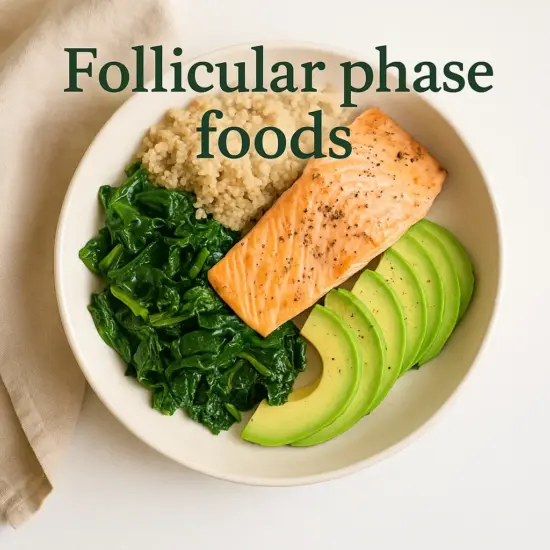
Follicular Phase Foods for Estrogen Balance & Fertility
You can be doing everything ‘right’—tracking ovulation, eating clean, exercising—yet still feel stuck. That was the case for one of my clients, who seemed healthy on paper but wasn’t getting pregnant. We noticed that her estrogen levels were barely rising during the follicular phase —the first half of her cycle, when estrogen should steadily increase to support ovulation. When we looked closer, we realized the missing link was her diet—specifically, the lack of follicular phase foods, sometimes called fertility foods because they support estrogen production and ovulation
Once she began focusing on follicular phase foods, nutrients that support estrogen production, egg quality, and hormone balance, we saw real changes. Her mood improved, ovulation became more consistent, and eventually, she got pregnant naturally.
If you’re trying to conceive or improve hormone health, what you eat during your follicular phase matters. Let’s break down how to eat for this part of your cycle to support estrogen, ovulation, and fertility naturally.
Understanding the Follicular Phase & Estrogen
The follicular phase begins on the first day of your period and ends with ovulation. During this time, estrogen (specifically estradiol) rises steadily.
What Estrogen Does in the Follicular Phase
During the follicular phase, estrogen plays a leading role in getting your body ready for ovulation and a possible pregnancy. Here’s how it works:
Helps eggs grow: Estrogen tells your brain to release a hormone called follicle-stimulating hormone (FSH). FSH signals your ovaries to start maturing several tiny “follicles,” each holding an egg. As these eggs develop, they produce even more estrogen.
Triggers ovulation: When estrogen reaches its peak, it sets off a surge of luteinizing hormone (LH), which causes one mature egg to be released—this is ovulation.
Supports fertility signs: Estrogen increases cervical mucus (which helps sperm reach the egg) and can naturally boost your sex drive.
Without enough estrogen, ovulation may be delayed or not occur at all. On the flip side, poor estrogen metabolism can lead to symptoms like acne, bloating, or PMS. That’s why the goal is not just more estrogen—but balanced estrogen.
Eating the right foods to boost estrogen and support its metabolism can be a game-changer for those TTC naturally or aiming for better hormone balance.
During the follicular phase, focus on nutrient-dense whole foods that support estrogen production and elimination (for balance). These foods can prime your body for ovulation:
1. Flaxseeds and Pumpkin Seeds
These seeds are one of the richest sources of lignans (natural phytoestrogens that weakly mimic estrogen) and zinc, which support both ovarian function, estrogen production and detoxification.
Add 1 tablespoon of ground flax and 1 tablespoon of pumpkin seeds to yogurt, smoothies or oats.
This combo is also used inseed cycling, a gentle method to support hormones.
2. Cruciferous Vegetables
Broccoli, kale, cauliflower, and Brussels sprouts are often considered foods high in estrogen-supporting compounds.
They contain DIM (diindolylmethane), a compound that helps your liver process and clear excess estrogen. By supporting estrogen balance (and not just production), these veggies help ensure you have enough estrogen for fertility without the bloat or PMS associated with estrogen dominance.
Aim for 1–2 servings per day.
Easy swaps: sautéed broccoli, roasted cauliflower, or a kale salad.
3. Leafy Greens and High-Fiber Fruits
Spinach, arugula, berries, and pears are loaded with folate, magnesium, and antioxidants that aid estrogen production and hormone regulation. Fruits such as berries, peaches, and pears also contain phytoestrogens and lots of fiber. Berries in particular are rich in vitamins (like vitamin C) that support ovarian health and are low glycemic (meaning they won’t spike your blood sugar as much).
Add a handful of spinach to eggs or a smoothie.
Add berries to your yogurt or enjoy with nut butter for fiber + healthy fat/protein.
4. Fermented Foods
A healthy gut is key to hormone balance. Yogurt, kefir, sauerkraut, and kimchi support gut health and estrogen metabolism via the estrobolome (a collection of gut microbes involved in hormone processing). Estrogen is processed through the liver and gut; an imbalance in gut bacteria can lead to reabsorption of estrogen. Including fermented foods during your follicular phase can support optimal estrogen levels by promoting a healthy microbiome.
Add 2–3 tablespoons of sauerkraut or ½ cup of kefir to meals daily.
5. Healthy Fats & Omega-3 Rich Foods
Avocados, olive oil, walnuts, flaxseeds, and fatty fish (salmon, sardines, mackerel), reduce inflammation and support hormone signaling and egg quality. Omega-3 fats have been shown to improve fertility in both women and men, and vitamin E (abundant in nuts and seeds) may improve egg quality.
Try to make a big salad with mixed greens (folate), topped with grilled salmon (protein and omega-3s), avocado (healthy fat), and a sprinkle of flax for healthy fats and crunch.
6. Whole Grains & Legumes
Swap refined carbs for whole grains such as quinoa, oats, brown rice, or whole-grain bread. These complex carbs are high in fiber and B vitamins (like B6, B9, B12), which support healthy estrogen metabolism and ovulation. Legumes (beans, lentils, chickpeas, edamame) are also excellent, as they combine plant protein with fiber and iron. Notably, soy (edamame, tofu, tempeh) contains isoflavones, a type of phytoestrogen. Moderate soy intake (a few servings a week) can be beneficial for fertility; research has found soy’s phytoestrogens can have mild estrogenic effects without negatively impacting ovulation in most people.
Think: ½ cup cooked lentils in soup, quinoa in a grain bowl and edamame as a snack.
7. Eggs and Full-Fat Dairy
Egg yolks contain choline and vitamin A, which are essential for follicle development and estrogen synthesis. Full-fat dairy offers fat-soluble vitamins and conjugated linoleic acid (CLA), which may support fertility.
Think: ½ cup cooked lentils in soup, quinoa in a grain bowl and edamame as a snack.
Key Nutrients That Support Estrogen and Ovulation
Beyond foods, these nutrients play a direct role in hormone balance:
Nutrient
Role in Follicular Phase
Top Food Sources
Folate
Supports egg quality, ovulation
Leafy greens, lentils and oranges
B6 & B12
Regulate estrogen and hormone signaling
Eggs, poultry, tuna, fortified grains
Magnesium
Supports estrogen production and reduces PMS
Pumpkin seeds, spinach, almonds
Zinc
Essential for hormone production and ovulation
Pumpkin seeds, beef, chickpeas
Iron
Replenishes post-period loss, supports ovulation
Lentils, spinach, red meat
Vitamin D
Promotes follicle development and hormone balance
Salmon, egg yolks, fortified dairy
Omega-3s
Improves blood flow, reduces inflammation
Fatty fish, flaxseeds, walnuts
Smart Supplements to Consider
Prenatal multivitamin: Ensures folate, iodine, B6, B12, iodine, vitamin D and iron sufficiency during rapid follicle growth.
Vitamin D3: 2,000 IU/day to reach serum ≥75 nmol/L—linked to improved IVF outcomes. Vitamin D is a common deficiency that can impact hormonal balance. Vitamin D actually acts like a hormone in the body and helps your ovaries produce estrogen and progesterone.
Omega-3 (DHA/EPA): 1,000-2,000 mg/day for higher pregnancy rates. can help reduce inflammation and support egg quality; consider an omega-3 supplement if you don’t eat fatty fish regularly. >>>>my favorite omega/3 supplement<<<<
Magnesium glycinate: for hormone and stress support
Always talk to a doctor or registered dietitian before starting any supplement- “natural” remedies can still have potent effects or interactions.
MY FAVORITE HIGH QUALITY PRENATAL
Lifestyle Add-Ons That Support Estrogen Naturally
Exercise (but don’t overdo it): The follicular phase is a great time to increase workout intensity. As estrogen rises, women often feel more energetic and can handle more vigorous workouts. Aim for at least 30 minutes, 3x weekly. That said, don’t overdo it. Excessive exercise or under-eating can lower estrogen (the body senses stress).
Sleep: Prioritize 7–9 hours nightly. Poor sleep and chronic stress can suppress reproductive hormones.
Stress reduction: Breathing exercises and meditation lower cortisol, which otherwise disrupts estrogen production.
Weight:Maintain a healthy weight for your body (being underweight or overweight can disrupt estrogen levels and ovulation
Balance blood sugar:Fluctuations in blood sugar and insulin can throw off your hormones. Pair carbs with protein and healthy fats. To keep yourblood sugar steady, pair carbs with protein and healthy fat, and favor complex carbs (sweet potatoes, quinoa, beans) over white bread or sweets.
Sample Follicular Phase Food Meal Day
Meal
Example
Breakfast
Greek yogurt with ground flax, berries, and walnuts
Lunch
Quinoa bowl with kale, lentils, roasted carrots, olive oil
Snack
Apple slices with almond butter + a Brazil nut
Dinner
Baked salmon, roasted broccoli, sweet potato
>>>*Want a complete 5-day Follicular phase Meal Plan? I got you covered!<<<
Why Follicular Phase Foods Matter for TTC Naturally
By focusing on follicular phase foods—and weaving in other fertility foods like legumes, leafy greens, and healthy fats—you create the foundation for hormone balance and conception. Many women find that after a couple of cycles of “cycle syncing” their diet – emphasizing foods that boost estrogen in the first half and then nurturing progesterone in the second half – they experience more regular periods, improved hormone balance, and a sense of empowerment in their TTC journey. Additionally, these strategies can help regulate cycles, improve mood, and ease PMS, whether or not you’re trying to conceive.
Ready to Balance Your Hormones and Boost Your Fertility?
Eating with your cycle isn’t just trendy-it’s effective. By focusing on follicular phase foods that support estrogen, hormone metabolism, and egg quality, you’re building the groundwork for better fertility and balanced cycles.
You don’t have to navigate this alone. As registered dietitians, we create personalized plans aligned with your cycle and nutritional needs.
Book a free discovery call with our dietitian team to get started. We specialize in cycle syncing, hormone balance, and fertility nutrition—and we’re here to help you feel empowered every step of the way.
Radically Rooted offers customized meal plans just for you!
Reach out to us or Book a consultation with one of our expert-certified dietitians & nutritionists for individualized nutrition & supplementation advice!