
Epigenetic Programming with Food During Pregnancy: A Science-Backed Nutrition Guide
For decades, pregnant women have been reassured that the baby will “take what it needs” which is a comforting idea, but one that oversimplifies a remarkable biological process. Your baby’s DNA is established at conception, but how that DNA is expressed is not fixed. The environment your baby develops in — including what you eat — can influence gene expression in ways that matter for long-term health. That is where epigenetics comes in, and it is exactly why epigenetic programming with food during pregnancy is so important and deserves a clear, practical explanation.
This does not mean every meal has to be perfect or that one bite of spinach will change your baby’s future. It does mean that the nutrition pattern you build during pregnancy can help support the healthy growth, development, and long-term health of your baby. This post explains the science in plain language and gives you a realistic framework to apply it.
What Epigenetics Actually Means
Epigenetics is the study of how signals from the environment can influence how genes are turned on or off without changing the DNA sequence itself. During pregnancy, the developing baby is especially responsive to these signals because the epigenome is being established rapidly. Nutrition is one of the most important inputs in that process.
In simple terms, food does not alter your baby’s genetic code, but it can influence how those genes are read and expressed. Research has linked maternal nutrition to changes in DNA methylation and related epigenetic mechanisms involved in growth, metabolism, and organ development.
Why the Prenatal Period Is a Critical Window
Pregnancy is a critical window for fetal development, and early nutrient exposures can influence fetal development in areas including neurodevelopment, cardiometabolic health, and organ formation.
The research is still evolving, and much of the strongest mechanistic evidence comes from animal studies, so we should be careful not to overstate what any single food or meal can do. Still, the overall message is clear: steady, nutrient-dense eating supports healthy development.
Nutrients That Matter Most for Epigenetic Programming
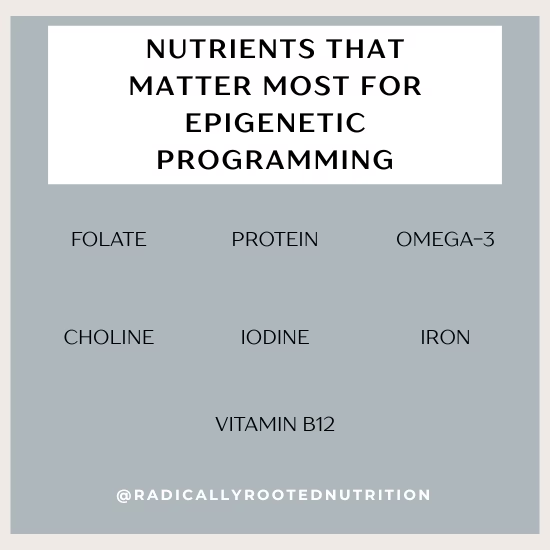
Several nutrients are repeatedly highlighted in the epigenetics literature because they support this process and supply the methyl groups needed for DNA methylation. Think of your baby’s DNA like a light switch panel. Every switch (every gene), is already installed at conception, but which switches are on and which are off during development is not fixed. Nutrients from your diet act as the hands that flip those switches. The key ones involved in this process include folate, vitamin B12, choline, methionine, and cofactors such as vitamins B2, B6, and zinc. One-carbon metabolism is simply the behind-the-scenes process that puts these nutrients to work. Eat enough of them consistently, and the system has what it needs to do its job.
Nutrient | Role in Pregnancy | Food Sources |
Folate | Neural tube development; DNA methylation substrate | Leafy greens, lentils, black beans, chickpeas, fortified grains |
Choline | Brain development; one-carbon metabolism; often under-supplied by prenatal vitamins — aim for 450 mg/day | Eggs (especially yolks), dairy, meat, soy, legumes |
Vitamin B12 | Cofactor for folate metabolism; neurological development | Meat, fish, dairy, eggs, fortified plant milks |
Fetal brain and retinal development | Salmon, sardines, trout, mackerel (all low-mercury); algae-based DHA for plant-based diets | |
Iron | Oxygen delivery; fetal growth and brain development | Red meat, legumes, tofu, fortified cereals (pair with vitamin C) |
Iodine | Thyroid function; fetal neurodevelopment; often overlooked in prenatal planning | Iodized salt, dairy, seafood, eggs |
Protein | Tissue building; blood sugar regulation; supports overall dietary adequacy | Eggs, Greek yogurt, legumes, poultry, fish, tofu |
Building a Prenatal Eating Pattern That Works
The most effective approach to prenatal nutrition is not a list of superfoods or a rigid meal plan. It is a varied, minimally processed, whole food diet built around nutrient density. Public health guidance for pregnancy consistently emphasizes fruits, vegetables, whole grains, protein foods, dairy or fortified alternatives, healthy fats, and a prenatal supplement.
Practical principles to apply daily:
- Anchor each meal around a protein source: eggs, Greek yogurt, legumes, tofu, poultry, fish, or dairy.
- Include a high-folate food every day: spinach, black beans, chickpeas, lentils, or fortified whole grains.
- Add choline-rich foods several times per week, especially eggs and dairy if tolerated.
- Eat low-mercury seafood regularly (about 8 to 12 ounces per week) for DHA and EPA.
- Choose healthy fats from olive oil, nuts, seeds, avocado, and fatty fish rather than ultra-processed snack foods.
- Use fats from whole food sources to improve absorption of fat-soluble nutrients like vitamins A, D, E, and K.
A simple plate example
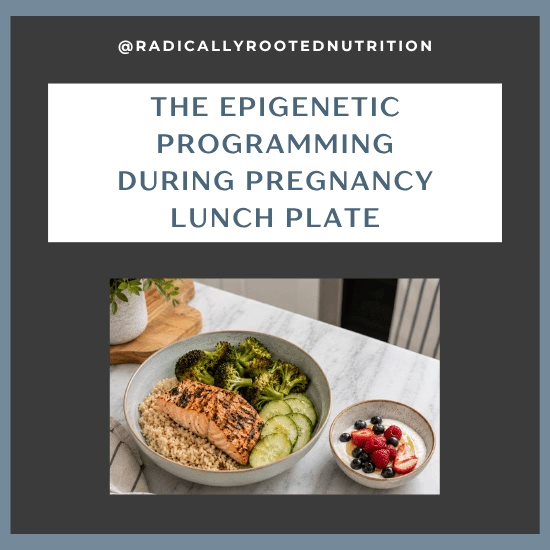
A practical lunch might be a bowl with brown rice, grilled salmon, roasted broccoli, cucumber, olive oil, and a side of yogurt with berries. This single meal covers protein, folate, choline, omega-3 fats, calcium, fiber, and a steady energy source. It does not require a complicated plan — just intentional choices stacked together. That is the kind of pattern that supports epigenetic programming with food during pregnancy in real life.
What to Keep in Perspective
Epigenetic programming with food during pregnancy is a real and important concept, but it is easy to let it tip into anxiety. A few things worth keeping in mind:
- No single food, supplement, or smoothie optimizes fetal gene expression. Overall dietary quality over time is what matters.
- Nutrition is one part of the pregnancy picture. Sleep, activity, stress management, avoidance of smoking and alcohol, and good medical care all influence maternal and fetal outcomes.
- Focus on what you can control. A consistent, realistic eating pattern is more valuable than a rigid protocol followed for the short term.
A Simple Daily Framework
If you want a starting point, prioritize these 5 habits:
- Take a prenatal supplement that includes folic acid, iron, iodine, and DHA. Check the label for choline — if it is absent or low, supplement separately or prioritize eggs daily.
- Prioritize eating protein at every meal to support tissue development and blood sugar stability.
- Include at least one fiber-rich plant food at most meals for gut health, satiety, and micronutrient variety.
- Use seafood strategically: 8 to 12 ounces of low-mercury options per week provides meaningful DHA and EPA without the risk associated with high-mercury fish.
- Keep ultra-processed foods minimal.

The Bottom Line
Epigenetic programming with food during pregnancy is not about achieving a perfect diet — it is about building a consistent pattern of nourishment that gives your baby the nutrients needed for healthy development and gene expression. The best approach is not extreme restriction or expensive supplements; it is steady, varied, whole-food eating supported by a quality prenatal supplement.
For individualized support with pregnancy nutrition, prenatal supplementation, nausea, appetite changes, or meal planning, book a 1:1 consultation.