
6 Ways Extra Body Fat Can Affect Fertility
If you’re trying to conceive, hearing that your “weight might be affecting your fertility” can feel vague and shaming, especially when no one explains why. As a fertility dietitian, my goal is to provide clear, science-backed information about how extra body fat can affect fertility, without blame and without scare tactics.
Research shows that higher body mass index (BMI) and central body fat are linked with irregular cycles, longer time to pregnancy, and higher miscarriage risk, even in otherwise healthy women. Understanding how excess body fat impacts fertility can help you focus on changes that genuinely improve your hormones, cycles, and chances of pregnancy.
1. Estrogen from Body Fat Can Disrupt Ovulation
One of the most important links between extra body fat and fertility is estrogen production.
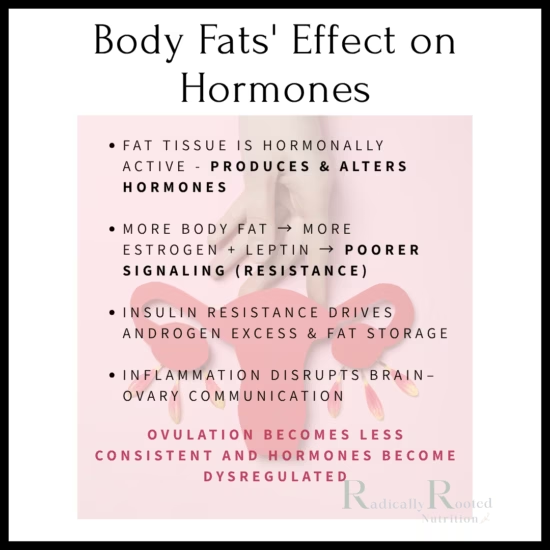
Body fat is not just “storage”; it is hormonally active tissue. Adipose (fat) tissue contains an enzyme called aromatase, which converts androgens into estrogen. As body fat increases, estrogen production also rises. Over time, this can lead to hyperestrogenism, meaning estrogen levels remain chronically elevated. When estrogen becomes dysregulated, communication between the brain and ovaries (known as the hypothalamic-pituitary-ovarian (HPO) axis) can be disrupted.
This may lead to:
- Irregular menstrual cycles
- Inconsistent ovulation
- Anovulatory cycles (cycles without ovulation)
Several studies show that women who are overweight or obese are up to three times more likely to experience irregular periods and ovulatory dysfunction, which can significantly reduce the chances of conceiving.
Science made simple:
Extra body fat → more estrogen from fat tissue → hormone signals between your brain and ovaries get “confused.”
That can show up as long cycles, skipped periods, or cycles that look regular on a calendar but do not consistently include ovulation.
2. Insulin Resistance Can Interfere with Ovarian Function
Insulin resistance is common in women with overweight or obesity, with or without a PCOS diagnosis. When cells become resistant to insulin, the body compensates by making more insulin; this is called hyperinsulinemia.
Elevated insulin levels can influence fertility by:
- Increasing androgen production in the ovaries
- Impairing follicle development
- Disrupting ovulation
A 2024 review highlights that insulin resistance can impair oocyte development, embryo quality, and endometrial receptivity, and lower success rates in assisted reproductive technology (ART). In PCOS and “PCOS-like” patterns, this combination of insulin resistance, hyperinsulinemia, and androgen excess is a key driver of anovulation and subfertility.
Improving insulin sensitivity is one of the most powerful metabolic strategies for supporting reproductive health.
3. Chronic Low-Grade Inflammation May Affect How Extra Body Fat Can Affect Fertility Through Implantation
Another way extra body fat can affect fertility is through chronic low-grade inflammation (a constant state of defense). Obesity is associated with higher levels of inflammatory cytokines and oxidative stress. These inflammatory signals reach the uterus and can impair endometrial receptivity (the ability of the uterine lining to support embryo implantation).
A 2021 transcriptome study of overweight and obese women undergoing IVF found that women who did not conceive had endometrial tissue with overactive immune and inflammatory pathways during implantation.
This inflammatory environment has been associated with:
- Reduced implantation rates
- Lower live birth rates
- Increased risk of early pregnancy loss
Science made simple:
- Chronic low-grade inflammation linked to excess body fat can disturb how the uterine lining grows and matures.
- For implantation to succeed, the uterine lining must be hormonally responsive and receptive- conditions that inflammation can disrupt.
4. Extra Body Fat Can Affect Fertility Through a Higher Risk of Uterine Fibroids
Another important connection between extra body fat and fertility is an increased risk of uterine fibroids. Fibroids are common non-cancerous growths that develop in the uterus. While many fibroids do not affect fertility, some can interfere with implantation depending on their size and location.
Multiple meta-analyses show that overweight and obesity are linked to a higher risk of uterine fibroids compared with normal BMI. A 2021 systematic review including more than 325,000 participants found that obesity was associated with a significantly increased risk of fibroids. A 2022 meta-analysis reported that overweight women had roughly 21–50% higher risk of fibroids, and obese women had up to twofold increased risk, compared with women of normal weight.
Why this matters for fertility:
- Fibroids that distort the uterine cavity or affect the lining can interfere with sperm transport, embryo implantation, and pregnancy maintenance.
- Because obesity is linked with higher fibroid risk, extra body fat can indirectly affect fertility by increasing the likelihood of fibroids that impact the uterus.
If you have heavy bleeding, pelvic pressure, or known fibroids and are trying to conceive, it is worth asking your provider whether imaging (such as a transvaginal ultrasound) is up to date and whether specific fibroids could be affecting fertility.
5. Extra Body Fat Can Affect Miscarriage Risk
Extra body fat can affect fertility by increasing the risk of miscarriage and lengthening the time it takes to conceive.
Importantly, this association appears to occur regardless of whether conception occurs naturally or through assisted reproductive technologies such as IVF.
A large JAMA Network Open study of couples trying to conceive found that elevated BMI in women was associated with reduced fecundability (lower probability of conception per cycle) and a higher risk of miscarriage.
Several biological factors may contribute to this increased risk, including:
- Altered hormone profiles
- Reduced oocyte (egg) quality
- Impaired endometrial responsiveness
While miscarriage is complex and influenced by many factors, metabolic health appears to play a meaningful role. This means it is a modifiable risk factor we can work on together through nutrition, movement, and metabolic support.
6. Leptin Dysregulation Can Disrupt Reproductive Hormones
Another important and often overlooked link between extra body fat and fertility involves a hormone called leptin.
Leptin is produced primarily by fat cells and signals the brain about energy stores, playing a key role in reproductive function.
In a healthy range, leptin communicates to the brain that the body has enough energy to support normal reproduction by supporting gonadotropin-releasing hormone (GnRH) secretion and, in turn, normal luteinizing hormone (LH) and follicle-stimulating hormone (FSH) patterns.
However, when body fat increases significantly, leptin levels rise and the body can develop “leptin resistance,” meaning the brain and ovaries stop responding properly to the high leptin signal.
This may affect:
- GnRH secretion
- LH and FSH hormone signalling
- Normal ovulation and egg quality
Clinical and experimental data suggest that leptin acts in a narrow window: too little (like in undernutrition) and too much (like in obesity) can both compromise reproductive competence.
Science made simple:
- Think of leptin as a “fuel gauge” for your fertility.
- With extra body fat, the leptin signal becomes too loud for too long, and the system stops listening. Leptin resistance can contribute to problems with ovulation, egg quality, and possibly implantation.

How Much Body Fat Actually Affects Fertility?
Research suggests fertility outcomes begin to change when body mass index reaches 25 kg/m² or higher, which is considered the start of the overweight range.
Women with higher BMI may experience longer time to pregnancy, lower ovulation frequency, higher miscarriage risk, and reduced success with fertility treatments.
However, BMI is only one measure of metabolic health. Factors such as insulin sensitivity, inflammation, and body fat distribution also play important roles. Even 5–10% improvements in body weight or metabolic health can help restore ovulation in some women and improve fertility outcomes.
What You CAN Do to Support Your Fertility
What the evidence tells us is that, with realistic improvements in metabolic health and, when appropriate, gradual reductions in excess body fat, we can improve ovulation, hormone balance, implantation, and pregnancy outcomes. These changes do not need to be extreme to be meaningful.
The goal is not extreme dieting or rapid weight loss. Instead, research supports focusing on metabolic health and hormone balance.
Evidence-based strategies include:
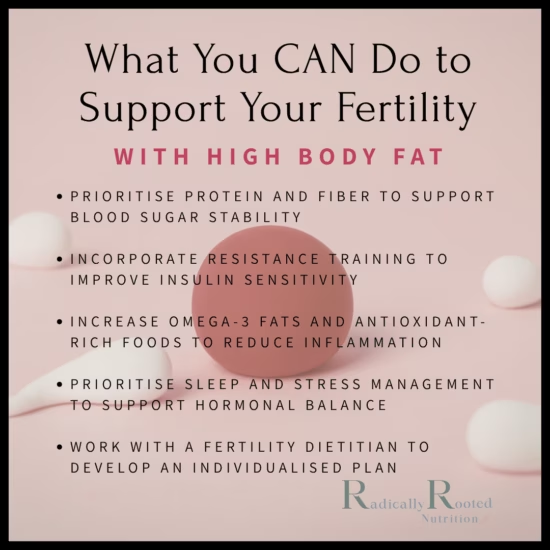
- Prioritise protein and fiber to support blood sugar stability
- Incorporate resistance training to improve insulin sensitivity
- Increase omega-3 fats and antioxidant-rich foods to reduce inflammation
- Prioritise sleep and stress management to support hormonal balance
- Work with a fertility dietitian to develop an individualised plan
The Bottom Line
The relationship between extra body fat and fertility is complex but well supported by scientific research. Excess adipose tissue can influence reproductive health through multiple pathways, including:
- Increased estrogen production and ovulatory dysfunction
- Insulin resistance and hyperinsulinemia
- Chronic inflammation affecting implantation
- Increased risk of uterine fibroids
- Higher miscarriage risk
- Leptin dysregulation affects reproductive hormones
The encouraging part is that many of these factors are modifiable. Improving metabolic health through nutrition, lifestyle changes, and targeted support can help restore hormone balance and create a more supportive environment for conception.
Ready for Personalized Prenatal Nutrition Support?
If you recognise yourself in this article- irregular cycles, possible insulin resistance, fibroids, or a long trying-to-conceive journey, you are not alone, and you are not “failing.” There are concrete, evidence-based levers we can work on together, in a way that is compassionate and sustainable.
If you’d like a tailored plan that blends fertility nutrition, metabolic health, and a non-shaming approach to body weight, I’d love to help.